
Small Chain Biomolecules Explained for Beginners
-
PepEurope
- Posted on
- 0 comments
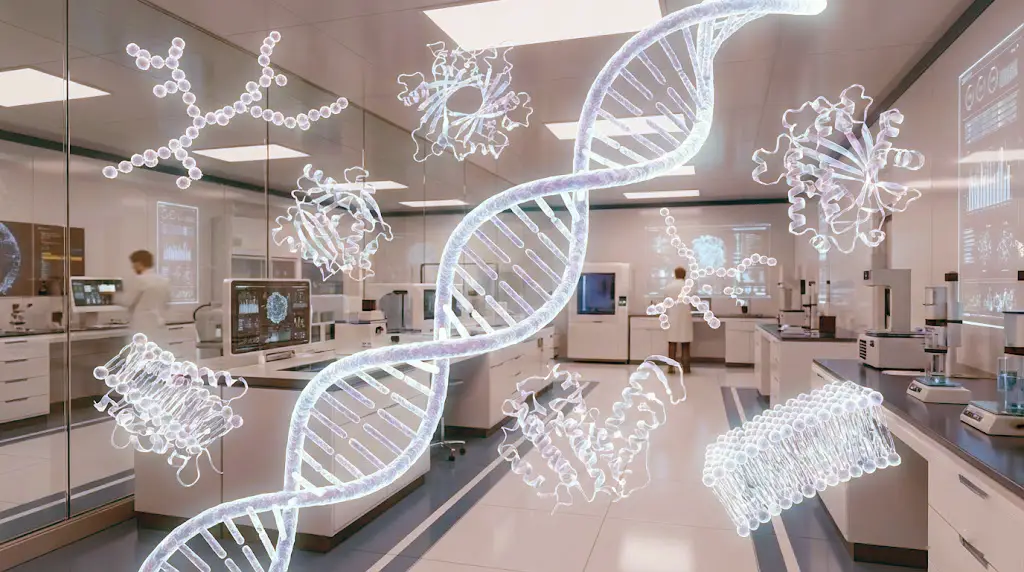
Discover small chain biomolecules explained and their role in energy, structure, and communication within cells. Learn fundamentals and key discoveries in biology.
Cells are the basic units of life, yet most people don’t realize that these microscopic structures are powered by tiny molecules working behind the scenes. Without these molecules, cells cannot generate energy, communicate, or maintain their structure, which can lead to diseases such as cancer. Understanding small chain biomolecules gives clarity on how life operates at a molecular level and why these molecules are critical for both health and scientific research.
By breaking down these molecular building blocks, we can explore how carbohydrates, proteins, lipids, and nucleic acids function individually and in combination, and how their proper regulation keeps our bodies functioning optimally.
What Are Small Chain Biomolecules?
Small chain biomolecules are the fundamental molecular components present in all living things. Despite their small size, they play enormous roles in energy production, cell structure, and communication. The four primary biomolecule classes include:
- Carbohydrates – sugars and polymers providing energy and structural support
- Proteins – polymers of amino acids forming enzymes, structural elements, and signaling molecules
- Lipids – fats, oils, and hormones that form membranes, store energy, and regulate cellular activity
- Nucleic acids – DNA and RNA storing and transmitting genetic information
Sema Beauty & Slim (weight control / healthy skin)
Sema Metabolic Boost (Appetite / Metabolism / Energy)
Metabolic Boost Duo (Appetite Suppression / Energy / Metabolism)
Sleep and Slim Pack (weight control / sleep regeneration)
Carbohydrates – Sugar Polymers Powering Life
Cells require constant energy, but without carbohydrates, this fuel is limited. Carbohydrates are polymers made of sugar monomers such as glucose, forming short or long chains. These molecules serve multiple essential functions:
- Major energy source for cellular processes
- Structural components, e.g., cellulose in plants for rigidity
- Storage molecules: starch in plants, glycogen in animals
- Cell signaling and adhesion
Carbohydrates act like the “battery packs” of the cell. Without them, cells cannot function efficiently, affecting metabolism, growth, and repair. Research into carbohydrates also provides insights into cancer metabolism and treatment strategies.
Proteins – Builders and Workers of the Cell
Cells must perform thousands of tasks simultaneously, and proteins are the molecular workers that make this possible. Composed of 20 different amino acids, proteins form long chains that fold into precise structures. Their functions include:
- Structural support for hair, nails, muscles, and cell membranes
- Enzymatic activity to speed up essential chemical reactions
- Transport of materials across membranes, e.g., glucose uptake
- Cell communication and adhesion
- Hormone signaling, e.g., insulin regulates blood sugar levels
Lipids – The Invisible Protectors
Cell membranes, energy storage, and hormone regulation all rely on lipids. These hydrophobic molecules include fats, oils, waxes, and steroid hormones. Lipids are essential for:
- Forming biological membranes (lipid bilayer) that protect and organize cells
- Storing energy in the form of triacylglycerols
- Coating skin and organs to prevent microbial invasion
- Regulating cell activity through hormones like estrogen and testosterone
The lipid bilayer creates a controlled environment, allowing selective transport while maintaining integrity. When lipid functions are disrupted, cellular signaling and defense mechanisms fail, potentially contributing to disease.
Sema Beauty & Slim (weight control / healthy skin)
Sema Metabolic Boost (Appetite / Metabolism / Energy)
Metabolic Boost Duo (Appetite Suppression / Energy / Metabolism)
Sleep and Slim Pack (weight control / sleep regeneration)
Nucleic Acids – The Blueprint of Life
Without nucleic acids, cells cannot replicate, express genes, or maintain proper function. DNA and RNA are polymers of nucleotides, carrying the instructions for life.
- DNA stores genetic information in a double helix, with nucleotides A, T, C, G forming base pairs.
- RNA is single-stranded, carrying information from DNA to the cytosol for protein synthesis.
Key of Small Chain Biomolecules
| Biomolecule | Monomer / Building Block | Primary Functions | Examples | Problem if Disrupted |
| Carbohydrates | Monosaccharides (e.g., glucose) | Energy source, structure, communication, cell adhesion | Starch, Glycogen, Cellulose | Energy deficiency, impaired cell signaling, structural weakness |
| Proteins | Amino acids (20 types) | Structure, enzymes, transport, cell signaling, hormones | Insulin, Collagen, Enzymes | Metabolic disorders, cancer, impaired tissue repair |
| Lipids | Fatty acids, glycerol | Membrane formation, energy storage, protection, hormone regulation | Fats, Oils, Steroid hormones | Membrane instability, metabolic issues, hormonal imbalances |
| Nucleic Acids | Nucleotides (A, T, C, G, U) | Genetic blueprint, protein coding, gene regulation | DNA, RNA | Uncontrolled cell growth, cancer, improper protein synthesis |
Combinations of Biomolecules
Biomolecules rarely act alone. Cells combine carbohydrates, proteins, and lipids to form functional structures such as glycoproteins and glycolipids.
- Glycoproteins are proteins with attached sugar chains, crucial for cell communication and immune defense
- Glycolipids combine sugars and lipids to stabilize cell membranes
- Many clinical tests, such as PSA for prostate cancer or CA-125 for ovarian cancer, detect specific glycoproteins
Sema Beauty & Slim (weight control / healthy skin)
Sema Metabolic Boost (Appetite / Metabolism / Energy)
Metabolic Boost Duo (Appetite Suppression / Energy / Metabolism)
Sleep and Slim Pack (weight control / sleep regeneration)
Why Understanding Small Chain Biomolecules Matters
Understanding small chain biomolecules allows researchers and health professionals to:
- Identify how cellular processes fail in diseases like cancer
- Design drugs that target specific molecular pathways
- Improve metabolic and immune health
- Advance personalized medicine through molecular-level knowledge
By grasping these fundamentals, anyone can appreciate how life functions at its most basic level and how minor molecular disruptions can have significant impacts.
FAQs
What are small chain biomolecules?
Small chain biomolecules are the fundamental molecules found in all living cells, including carbohydrates, proteins, lipids, and nucleic acids. These molecules are essential for energy production, structure, communication, and regulation of cellular processes. Understanding them is key to studying metabolism, health, and diseases like cancer.
Why are carbohydrates important in cells?
Carbohydrates are crucial as an energy source for cells and organisms. They form polymers such as starch in plants and glycogen in animals, providing stored energy. Additionally, carbohydrates contribute to cell structure, communication between cells, and the immune defense by aiding in the removal of foreign substances.
How do proteins function in cells?
Proteins are versatile molecules built from amino acids. They maintain cell structure, act as enzymes catalyzing chemical reactions, transport molecules like glucose, and mediate cell-to-cell communication. Defective proteins can lead to diseases, including metabolic disorders and cancers, making them a key focus in research and medicine.
What role do lipids play in human health?
Lipids form protective cell membranes, store energy as fats, and provide barriers on the skin and organs against microbial invasion. Steroid hormones derived from lipids regulate gene expression and cellular activity. Disruptions in lipid function can lead to metabolic imbalances, cardiovascular disease, and hormonal disorders.
How do nucleic acids control cellular functions?
DNA and RNA are nucleic acids that store and transmit genetic information. DNA acts as a stable blueprint for all cellular processes, while RNA carries instructions to produce proteins. Errors in nucleic acid replication or transcription can cause abnormal cell growth, unregulated division, and diseases like cancer.
What are glycoproteins and glycolipids?
Glycoproteins and glycolipids are biomolecule combinations where proteins or lipids attach to carbohydrate chains. They are essential for cell signaling, immune defense, and maintaining membrane stability. Clinically, they are used in diagnostic tests for cancers, such as PSA for prostate cancer or CA-125 for ovarian cancer.
Conclusion
Small chain biomolecules explained are the foundation of life. Carbohydrates fuel our cells, proteins build and regulate them, lipids protect and structure them, and nucleic acids provide the blueprint. Their interactions enable cells to function properly, communicate, and respond to stress or disease. Understanding these fundamentals empowers researchers, clinicians, and students to explore cellular health, disease mechanisms, and innovative treatments.