
How Mitochondrial Efficiency Boost Energy Systems & Growth
-
PepEurope
- Posted on
- 0 comments
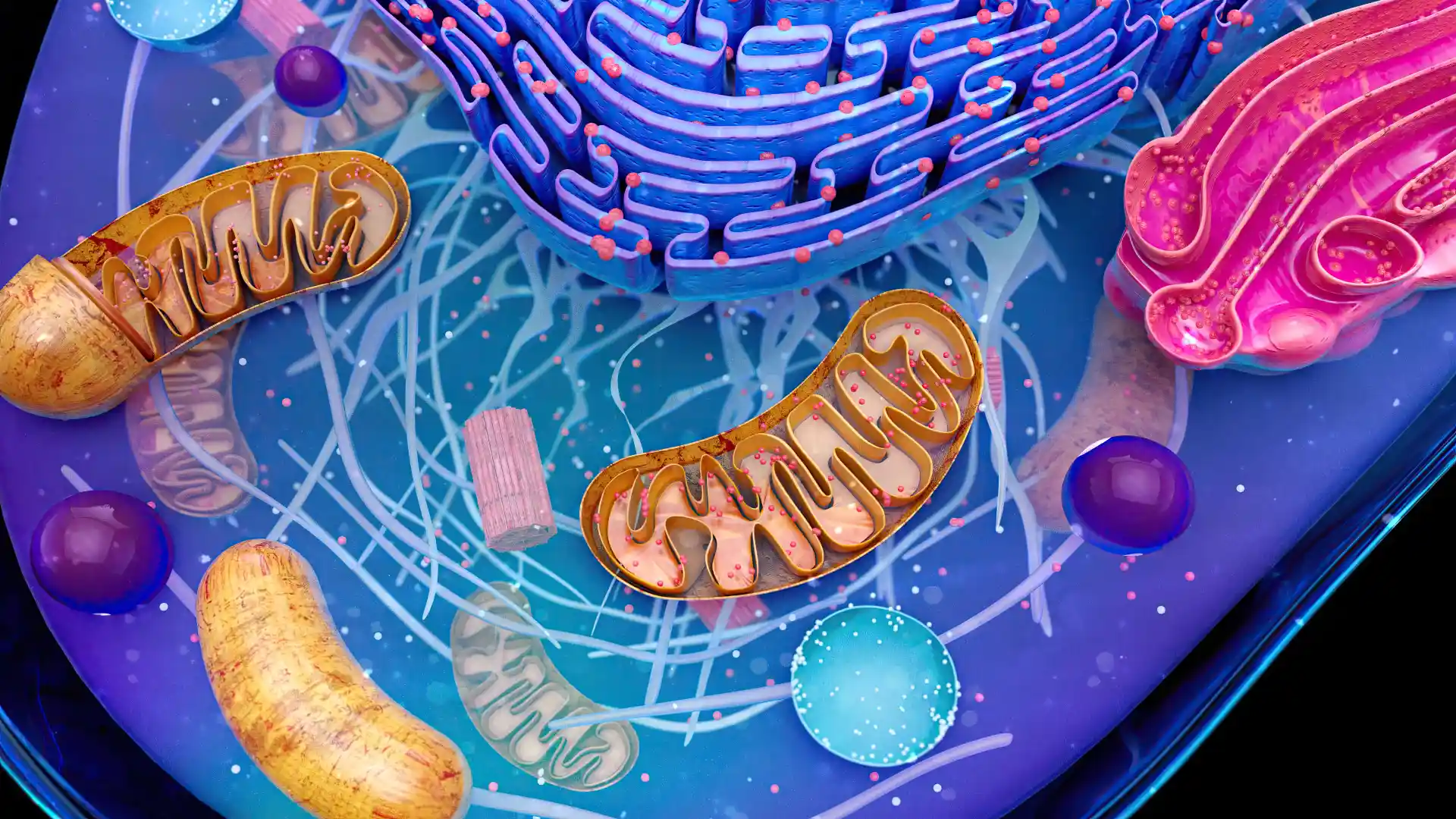
Ever wondered why some people stay energized? Answers may lie in a mitochondrial efficiency boost deep within your cells, specifically in tiny organelles called mitochondria. Often referred to as the powerhouses of the cell, mitochondria are responsible for converting nutrients into energy that fuels every function in your body. Recent mitochondrial efficiency research has revealed that the efficiency with which mitochondria generate energy plays a crucial role in overall health, growth, and metabolic performance.
In this blog, we’ll explore what mitochondrial is, why it matters, and practical steps you can take to optimize it for better energy, metabolic health, and overall well-being.
What Is Mitochondrial Efficiency?
Mitochondrial measures how effectively your cells convert nutrients into energy in the form of adenosine triphosphate (ATP). This is often quantified as the ATP/O ratio, which represents the amount of ATP produced per molecule of oxygen consumed. The higher the ATP/O ratio, the more efficiently your cells produce usable energy.
Several factors can influence mitochondrial efficiency:
- Proton leak: Energy lost as heat due to imperfect coupling of ATP production.
- Mitochondrial density: The number of mitochondria in a tissue, which can vary with age, diet, and exercise.
- Membrane composition: Lipids in the mitochondrial membrane affect how efficiently energy is produced.
- Environmental factors: Toxins, stress, and nutrient deficiencies can impair mitochondrial function.
Essentially, better mitochondrial efficiency means more energy is available for bodily functions, from muscle contraction and brain activity to protein synthesis and tissue repair.
Reta Support Formula 20 (GLP-1 + GIP + GCGR)
3 x RETA 20mg PACK
Tesofensine Supplements (Weight Loss/Neurotransmission)
Why Mitochondrial Efficiency Matters
1. Impact on Energy Levels
When mitochondria are less efficient, your cells struggle to produce enough ATP, leaving you feeling fatigued or low on energy. This can affect daily productivity, exercise performance, and even cognitive function. Studies show that individuals with higher mitochondrial efficiency often have greater endurance and recover faster from physical activity.
2. Role in Insulin Resistance and Metabolic Health
Research has demonstrated that variations in mitochondrial efficiency, especially in skeletal muscle, are linked to insulin sensitivity. Poorly functioning mitochondria can impair glucose metabolism, contributing to insulin resistance, fat accumulation, and an increased risk of type 2 diabetes. Conversely, mitochondria that efficiently convert nutrients into ATP can help maintain metabolic balance and prevent chronic conditions.
3. Influence on Growth and Cellular Repair
Interestingly, mitochondrial efficiency also plays a role in growth and protein synthesis. For example, studies on juvenile brown trout show that individuals with highly efficient liver mitochondria had faster rates of protein synthesis and overall growth, even when consuming the same amount of food as less efficient individuals. This demonstrates how energy conversion at the cellular level can influence organismal growth and development.
How Mitochondrial Efficiency Research Helps You Solve Health Challenges
Understanding mitochondrial efficiency is not just academic it offers actionable strategies for optimizing your energy, metabolism, and growth. Here’s how you can apply these insights:
Step 1: Assess Your Cellular Energy
- Biomarkers like ATP production and oxygen consumption can indicate mitochondrial function.
- At-home signs of low efficiency include fatigue, slow recovery after exercise, or difficulty sustaining endurance.
Step 2: Boost Mitochondrial Efficiency Naturally
- Exercise: Regular endurance or high-intensity interval training (HIIT) increases mitochondrial density and efficiency.
- Diet:
- Maintain balanced macronutrients; avoid excessive high-fat diets that may compromise efficiency.
- Incorporate nutrient-rich foods supporting mitochondria, such as CoQ10, omega-3 fatty acids, and polyphenols.
- Lifestyle:
- Avoid environmental toxins, manage stress, and prioritize quality sleep to support mitochondrial health.
Step 3: Monitor and Optimize Over Time
- Track energy levels, endurance, and metabolic markers to gauge improvements.
- Adjust training, nutrition, and lifestyle habits based on feedback.
By following these steps, you can enhance mitochondrial efficiency, turning calories into energy more effectively while improving overall performance, growth, and metabolic health.
Reta Support Formula 20 (GLP-1 + GIP + GCGR)
3 x RETA 20mg PACK
Tesofensine Supplements (Weight Loss/Neurotransmission)
How to Measure Growth and Energy Efficiency
To make these efficiency actionable, researchers and nutritionists measure growth and energy conversion using formulas that quantify:
- Food intake
- Body mass changes
- Protein synthesis
Here’s a table of key formulas used in mitochondrial efficiency research:
| Parameter | Formula | Description |
|---|---|---|
| Intermediate Ration | \( \text{intermediate ration} = 24.062 \times W^{0.737} \times \exp(0.105 \times T) \) | Estimates daily energy intake based on body weight (W) and temperature (T), guiding nutritional planning. |
| Specific Growth Rate (SGR) | \( \text{SGR} = \frac{\ln(\text{final BM}) - \ln(\text{initial BM})}{\text{days elapsed}} \times 100 \) | Measures the percentage increase in body mass per day, reflecting overall growth performance. |
| Growth Efficiency | \( \text{Growth Efficiency} = \frac{\text{gain in BM day}^{-1}} {\text{mass of pellets eaten day}^{-1}} \) | Determines how efficiently nutrients are converted into body mass, linking to mitochondrial ATP production. |
| Specific Protein Gain (SPG) | \( \text{SPG} = \frac{\ln(\text{final BP}) - \ln(\text{initial BP})} {\text{days elapsed}} \times 100 \) | Calculates protein accumulation per day, showing efficiency of protein synthesis relative to growth. |
| Ks (Protein Utilization Coefficient) | \( Ks = \frac{24}{t} \times \frac{ \left(\frac{D_{5}\text{Phe}}{\text{total Phe}}\right)_{\text{protein amino acid}} }{ \left(\frac{D_{5}\text{Phe}}{\text{total Phe}}\right)_{\text{free amino acid}} } \times 100 \) | Evaluates how effectively dietary amino acids are incorporated into body protein, providing insight into nitrogen metabolism. |
Key: BM = Body Mass, BP = Body Protein, W = Weight, T = Temperature, D₅Phe = Labeled phenylalanine tracer.
These measurements allow scientists to link cellular energy production with observable growth outcomes, making the research highly actionable.
Reta Support Formula 20 (GLP-1 + GIP + GCGR)
3 x RETA 20mg PACK
Tesofensine Supplements (Weight Loss/Neurotransmission)
Practical Solutions for Optimizing Mitochondrial Efficiency
While much of the research is conducted in animal models, the principles apply to humans too. Here are practical ways to enhance your energy systems:
- Balanced nutrition: Ensure adequate protein, healthy fats, and micronutrients that support mitochondrial function (e.g., CoQ10, magnesium, B vitamins).
- Targeted exercise: Moderate endurance training improves mitochondrial density and efficiency, while resistance training promotes protein synthesis.
- Manage oxidative stress: Antioxidants from foods like berries, spinach, and nuts help prevent damage from reactive oxygen species produced by mitochondria.
- Intermittent fasting or caloric cycling: Can stimulate mitochondrial adaptation, improving ATP yield and energy utilization.
- Hydration and oxygen support: Efficient oxygen delivery is critical for mitochondria to maximize ATP production.
FAQs
What is mitochondrial efficiency, and why should I care?
Mitochondrial efficiency measures how well your cells convert nutrients into energy (ATP) relative to oxygen use. High efficiency means your body extracts more energy from the same amount of food, fueling muscles, brain, and other organs. Low efficiency can lead to fatigue, poor exercise performance, and metabolic issues. Optimizing efficiency can improve energy, metabolism, and overall health.
Can improving mitochondrial efficiency prevent insulin resistance?
Yes. Studies indicate that mitochondrial inefficiency in skeletal muscle is linked to insulin resistance, a key factor in type 2 diabetes. By improving mitochondrial function through exercise, balanced nutrition, and lifestyle interventions, cells become more adept at using glucose for energy, which helps maintain normal insulin sensitivity and prevent chronic metabolic conditions.
How does diet affect mitochondrial efficiency?
Diet has a direct impact on mitochondrial performance. Nutrient deficiencies, high-fat or high-sugar diets, and oxidative stress can reduce efficiency, causing energy loss as heat. On the other hand, consuming antioxidants, polyphenols, CoQ10, and omega-3 fatty acids supports mitochondrial membrane integrity and ATP production, enhancing energy levels and metabolic health.
Does mitochondrial efficiency affect growth or protein synthesis?
Yes. Research, including studies on juvenile brown trout, shows that individuals with higher liver mitochondrial efficiency produced more ATP, enabling faster protein synthesis and growth, even with identical food intake. Efficient mitochondria allow cells to allocate energy toward anabolic processes, supporting tissue growth and repair.
Are there supplements that support mitochondrial health?
Certain supplements have evidence-based benefits for mitochondrial efficiency. These include CoQ10, NAD+ precursors, L-carnitine, and omega-3 fatty acids. They help enhance ATP production, reduce oxidative stress, and support membrane integrity. However, supplementation should complement exercise and a nutrient-rich diet, not replace healthy lifestyle habits.
How can I test my mitochondrial efficiency?
Mitochondrial efficiency is typically measured in labs via the ATP/O ratio or oxygen consumption rates in tissues or blood cells. Indirect at-home indicators include endurance, energy levels, recovery speed, and metabolic markers like glucose tolerance. Combining lab assessments with lifestyle tracking provides the most comprehensive view of cellular energy health.
Conclusion
Mitochondrial efficiency is a cornerstone of energy, metabolic health, and growth. While food intake and lifestyle choices matter, the ability of mitochondria to convert nutrients into ATP effectively can explain why some individuals feel energetic and grow faster than others under similar conditions. By leveraging insights from these efficient research of Mitochondrial , you can optimize your exercise, diet, and lifestyle strategies, enhancing your energy, metabolic performance, and overall well-being.
Start prioritizing mitochondrial health today. It’s not just about calories; it’s about how your body converts them into the energy that powers your life.