
Why Body Recomposition Often Feels Difficult?
-
PepEurope
- Posted on
- 0 comments
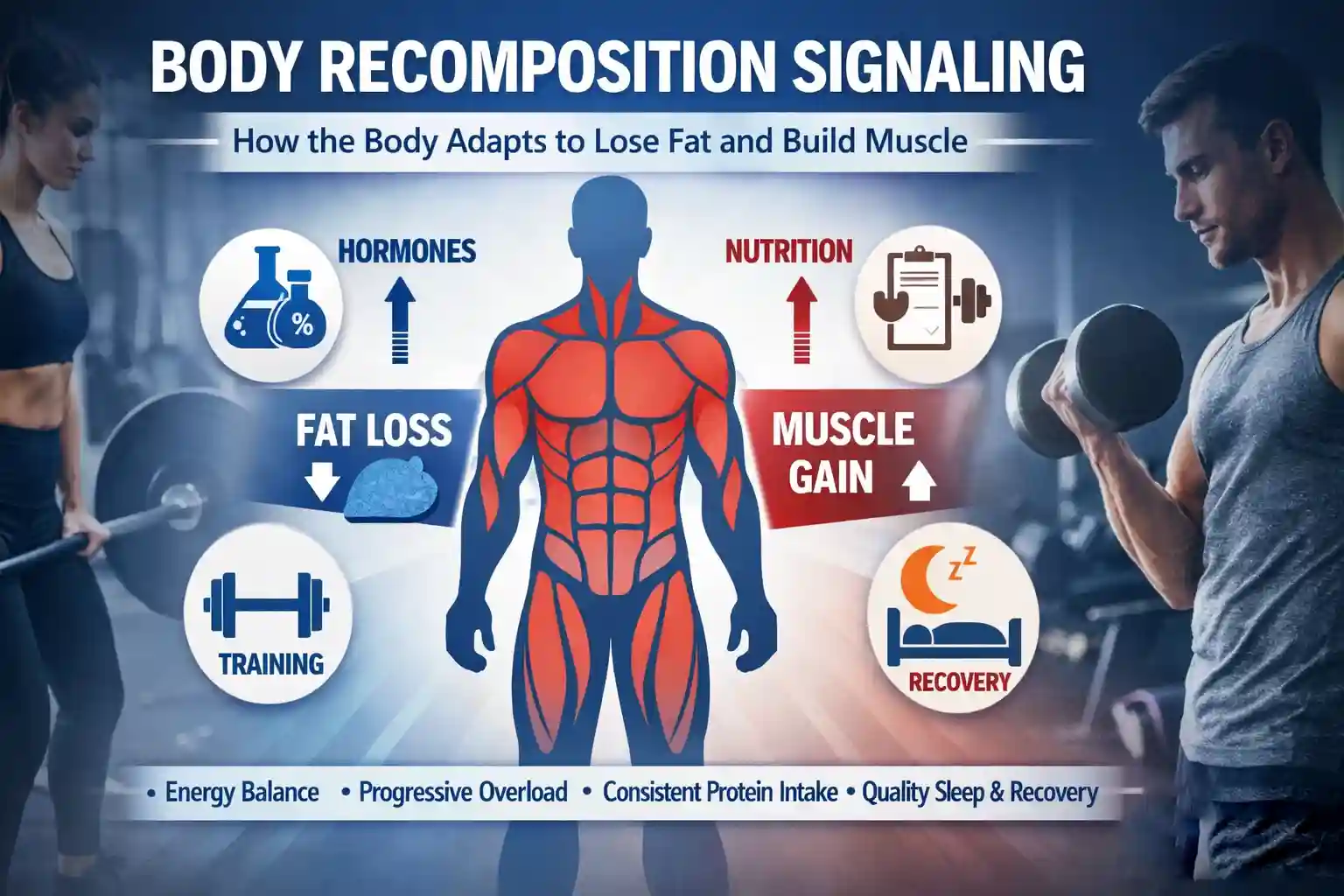
Many people follow structured diets and training plans yet struggle to lose fat while gaining muscle at the same time. This frustration often comes from misunderstanding how the body adapts to change. Body recomposition is not controlled by willpower alone; it is regulated by biological communication systems that decide whether the body stores fat, builds muscle, or conserves energy.
Body recomposition signaling refers to how the body interprets inputs such as nutrition, exercise, stress, and recovery to determine physical adaptation. When these signals are aligned, the body can gradually reduce fat while preserving or increasing lean muscle mass. When they are misaligned, progress stalls despite effort.
What Is Body Recomposition Signaling?
Body recomposition signaling is the internal communication process through which the body decides how to allocate energy between fat storage, fat burning, muscle repair, and muscle growth. Instead of responding to a single action, the body evaluates multiple signals simultaneously.
These include calorie availability, protein intake, mechanical tension from training, hormonal balance, and recovery quality. The body prioritizes survival and efficiency, meaning it resists rapid or aggressive change. Understanding this signaling process allows individuals to design strategies that encourage adaptation instead of triggering metabolic resistance.
Key signaling inputs:
- Energy availability from food intake
- Mechanical stress from resistance training
- Hormonal feedback from sleep and stress
- Recovery signals from rest and nutrient timing
Sema Beauty & Slim (weight control / healthy skin)
Sema Metabolic Boost (Appetite / Metabolism / Energy)
Metabolic Boost Duo (Appetite Suppression / Energy / Metabolism)
Sleep and Slim Pack (weight control / sleep regeneration)
The Role of Body Adaptation in Recomposition
Body adaptation is the process by which the body adjusts to repeated stimuli over time. When exposed to consistent signals, the body remodels tissues to meet demand. In body recomposition, this means preserving muscle during fat loss or gradually increasing muscle while reducing fat mass.
Aggressive calorie restriction or excessive training often disrupts adaptation by triggering energy conservation signals. Sustainable recomposition depends on gradual inputs that the body can interpret as safe and repeatable.
Why does adaptation matter?
- The body defends against perceived energy shortages
- Muscle tissue is metabolically expensive to maintain
- Consistent signals produce long-term change
Key Systems Behind Body Recomposition Signaling
- Hormonal Signaling
Hormones act as chemical messengers that coordinate fat metabolism, muscle repair, and energy use. Insulin directs nutrients into cells, cortisol regulates stress and energy availability, thyroid hormones control metabolic rate, and sex hormones influence muscle protein synthesis. Balanced hormonal signaling supports efficient nutrient partitioning, while chronic stress or poor sleep disrupts this balance and slows adaptation. - Energy Balance Signaling
The body continuously assesses energy intake relative to expenditure. A small calorie deficit encourages fat use without triggering muscle breakdown. Severe deficits activate conservation pathways that reduce metabolic output and impair muscle retention. Body recomposition signaling works best when energy intake is slightly below or near maintenance levels. - Mechanical and Activity Signaling
Resistance training provides a direct mechanical signal to muscle tissue, indicating the need for growth or preservation. Progressive overload strengthens this signal, while excessive cardio without recovery can dilute it. Daily movement also contributes to energy expenditure without overstressing adaptation systems. - Recovery Signaling
Recovery is when adaptation occurs. Sleep, rest days, and stress management signal safety and availability of resources. Growth hormone release during deep sleep supports muscle repair and fat metabolism. Without adequate recovery, signaling becomes distorted and progress slows.
Sema Beauty & Slim (weight control / healthy skin)
Sema Metabolic Boost (Appetite / Metabolism / Energy)
Metabolic Boost Duo (Appetite Suppression / Energy / Metabolism)
Sleep and Slim Pack (weight control / sleep regeneration)
How Nutrition Influences Body Recomposition Signaling
Nutrition provides both raw materials and information to the body. Protein intake signals muscle preservation and repair, while carbohydrates inform energy availability. Fat intake supports hormonal balance.
Timing and consistency matter as much as quantity. Spreading protein intake evenly throughout the day helps maintain anabolic signaling, while extreme restriction sends stress signals that impair recomposition.
Nutrition strategies that support signaling!
- Consistent protein intake across meals
- Moderate carbohydrate timing around training
- Adequate micronutrient intake
- Avoiding large calorie fluctuations
Training Strategies That Support Body Adaptation
Training should stimulate adaptation without overwhelming recovery systems. Resistance training sends a clear signal for muscle maintenance and growth, while appropriate rest allows that signal to be acted upon. Training intensity should progress gradually, allowing the nervous system and connective tissue to adapt alongside muscle tissue.
Effective training signals:
- Progressive overload
- Compound movements
- Structured rest periods
- Balanced weekly volume
Common Mistakes That Disrupt Body Recomposition Signaling
Many people unintentionally block recomposition by sending conflicting signals to the body. Extreme dieting, inconsistent training, poor sleep, and chronic stress all communicate energy scarcity or threat. The body responds by conserving fat and reducing muscle-building processes.
Common disruptions:
- Severe calorie restriction
- Excessive cardio without recovery
- Inconsistent protein intake
- Sleep deprivation
- Constant program changes
Sema Beauty & Slim (weight control / healthy skin)
Sema Metabolic Boost (Appetite / Metabolism / Energy)
Metabolic Boost Duo (Appetite Suppression / Energy / Metabolism)
Sleep and Slim Pack (weight control / sleep regeneration)
How to Tell If Body Recomposition Signaling Is Working
Progress during recomposition is not always reflected on the scale. Muscle gain and fat loss can occur simultaneously, masking weight changes. Instead, improvements in strength, energy levels, recovery speed, and body measurements indicate positive adaptation. Clothing fit and visual changes often precede scale movement.
Positive adaptation indicators:
- Strength improvements
- Better workout recovery
- Increased energy
- Gradual body shape changes
Body Recomposition Signaling Systems Overview
Best placement – After Key Systems Behind Body Recomposition Signaling to summarize complex information.
| Signaling System | Primary Role | Key Inputs | Outcome |
| Hormonal | Regulates fat storage and muscle growth | Sleep, stress, nutrition | Nutrient partitioning |
| Energy Balance | Controls fuel usage | Calories in vs out | Fat loss or conservation |
| Mechanical | Stimulates muscle adaptation | Resistance training | Muscle preservation/growth |
| Recovery | Enables tissue repair | Sleep, rest days | Long-term adaptation |
FAQs
What is body recomposition signaling?
Body recomposition signaling refers to the internal biological communication processes that determine whether the body prioritizes fat loss, muscle growth, or energy conservation. These signals come from nutrition, training, hormones, and recovery.
When the body consistently receives signals that energy is available and muscle is needed, it adapts by preserving or building lean tissue while gradually reducing fat mass. This process is slow and cumulative, requiring aligned inputs over time rather than aggressive short-term interventions.
How long does body adaptation take during recomposition?
Body adaptation occurs gradually and depends on consistency rather than intensity. Early improvements in strength and energy may appear within a few weeks, but visible body composition changes typically take 8 to 16 weeks.
Hormonal balance, recovery quality, and prior training history influence this timeline. Because the body prioritizes stability, sustained signals over months produce more reliable and lasting recomposition results.
Can body recomposition happen without weight loss?
Yes, body recomposition can occur without significant changes on the scale. Muscle tissue is denser than fat, so losing fat while gaining muscle may result in minimal weight change.
However, body shape, measurements, and performance often improve. This is why tracking strength, measurements, and visual progress is more informative than relying solely on body weight during recomposition.
Why does fat loss stall during recomposition?
Fat loss may stall when the body perceives energy scarcity or excessive stress. Severe calorie restriction, inadequate protein intake, poor sleep, or overtraining can trigger conservation mechanisms.
These signals increase fat retention and reduce metabolic output. Adjusting recovery, protein intake, or calorie levels often restores proper body recomposition signaling and renews progress.
Does sleep affect body recomposition signaling?
Sleep plays a critical role in body recomposition signaling. During deep sleep, growth hormone release supports muscle repair and fat metabolism. Poor sleep disrupts insulin sensitivity and elevates stress-related hormones, which can increase fat storage and impair recovery.
Consistent, high-quality sleep is one of the most powerful tools for improving body adaptation and recomposition outcomes.
Conclusion
Body recomposition signaling is the foundation of sustainable fat loss and muscle gain. The body responds best to consistent, well-aligned signals that indicate safety, energy availability, and functional demand. Rather than relying on extreme dieting or excessive training, successful recomposition comes from understanding how the body adapts over time.
By aligning nutrition, training, and recovery, individuals can support natural body adaptation and achieve long-term improvements in body composition. PepEurope Ltd continues to sell science-driven research GLP-1 peptides to help individuals make informed, sustainable decisions.